How Famen Temple's Stone Inventory Helped Identify Secret-Color Porcelain
2026-11-24
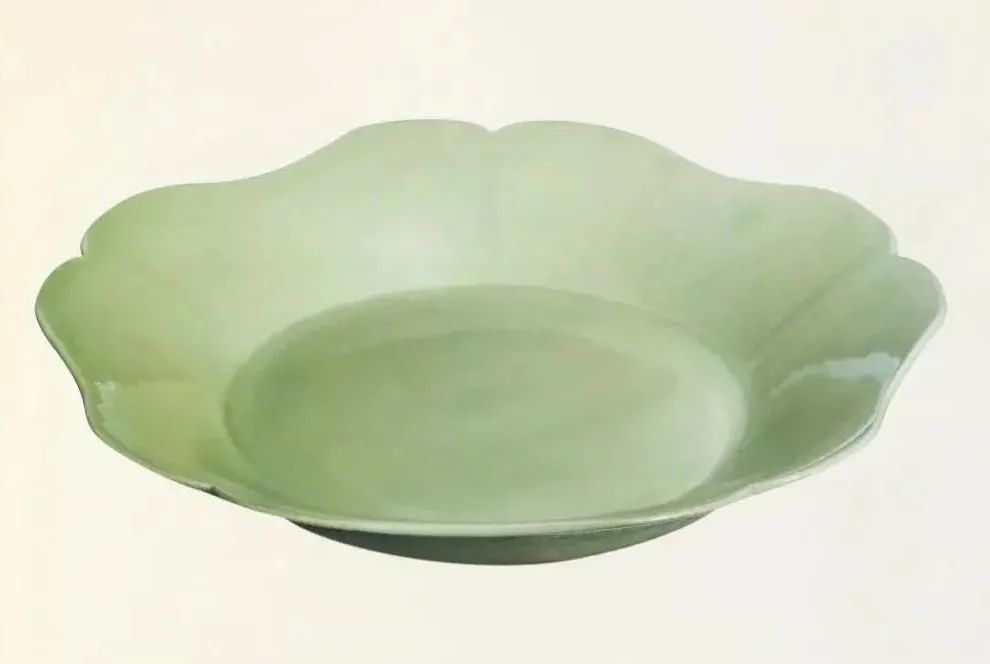
The stone inventory named seven bowls. Two, it added, had silver-edged rims. The next entry listed six dishes and plates. All were described with a name that would puzzle generations of readers: mise, or “secret color.”
When archaeologists opened an underground chamber beneath Famen Temple in 1987, they found ceramics alongside an inscription recording offerings from the Tang court. For researchers who had spent years asking what secret-color porcelain actually looked like, the written list and the surviving objects offered something unusually valuable: two pieces of evidence from the same place.
The discovery did not settle every argument about the ware. But it gave an elusive name a group of real objects to which scholars could return.
The name that survived without a certain object
Before the Famen Temple excavation, mise appeared in historical writing and poetry. The late-Tang poet Lu Guimeng described Yue ware as carrying the green of a thousand mountain peaks. Later writers used the term in discussions of fine celadon associated with the Yue kilns of eastern China.
Those descriptions were evocative, but they were not a museum label attached to a surviving bowl. A poetic comparison could suggest a color or a quality without showing exactly which of the many green-glazed vessels found centuries later deserved the name.
That left researchers with a problem. Yue kilns produced celadon over a long period, and archaeologists had recovered many green-glazed objects. Which of them, if any, corresponded to the mise named in old texts? Scholars could make comparisons and propose identifications, but an ancient account connecting the term to actual vessels would make the case much stronger.
A collapsed pagoda and a chamber beneath it
The breakthrough came far from the Yue kilns. Famen Temple stands in Fufeng County, Shaanxi, in northwestern China. Part of its old pagoda collapsed in 1981, and work to repair the site eventually led archaeologists to investigate beneath its foundations.
In April 1987, the excavation revealed a Tang-dynasty underground chamber. Its contents included precious offerings associated with the Buddhist temple and the imperial court. A stone inventory had been placed with them, recording a range of objects deposited there.
The chamber had been sealed in 874, according to the Guggenheim Museum’s account of the Famen finds. That date matters: the deposit preserves evidence for what the Tang court was calling mise by the ninth century, long before modern scholars began trying to identify it.
The stone was not a modern catalogue. It was an old record of offerings, written for a very different purpose. Yet, once the chamber was opened, its entries could be compared with objects that had survived beside it.
Seven bowls, six dishes, and one useful inscription
The relevant passage recorded seven secret-color bowls, including two with silver edging, and six plates or dishes. The Chinese wording on the stone uses the term “瓷秘色”—the crucial label linking the written account to the ceramics.
The Palace Museum explains that fourteen pieces of Yue ware were found in the chamber, while the inventory identifies thirteen of the objects—bowls, plates and saucers—as mise. The distinction is important. The stone does not simply say “fourteen pieces” and settle the identity of each one by name.
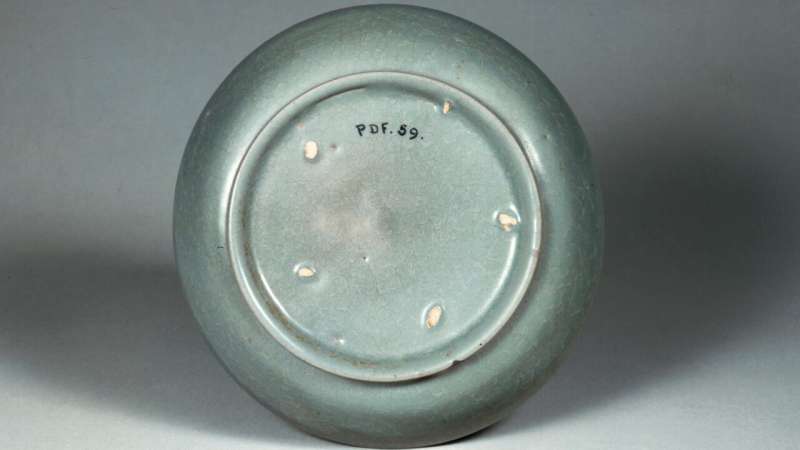
One of the surviving vessels, a bowl now in the National Museum of China, is described by the museum as one of the secret-color porcelains explicitly recorded in the chamber’s inventory. Its outer wall still carries traces of the paper in which it had been wrapped, with an image of a Tang court lady remaining on the fragment. Even its packaging tells part of the story of how the object was put away.
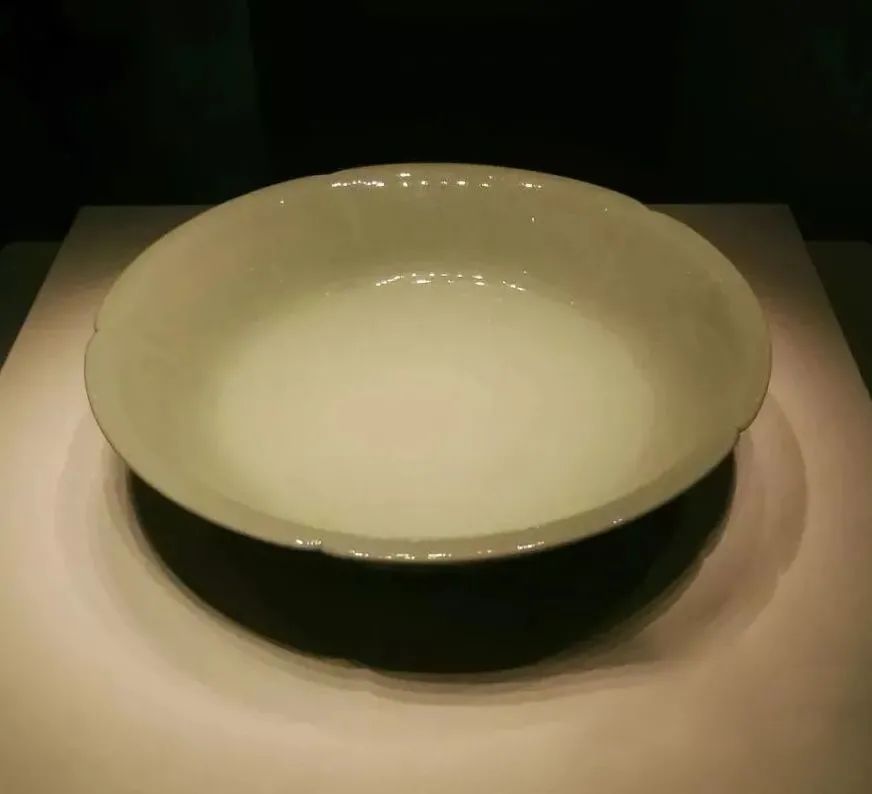
Image Source: Guanfu Museum via The Paper. The source identifies the dish as part of the National Museum of China collection.
The point was not that the stone told researchers everything about a glaze. It connected a historical term, a count and a group of surviving objects. Scholars now had material evidence they could examine instead of relying on literary descriptions alone.
Why the fourteenth vessel needs a different explanation
Another Famen find complicates the count: an eight-sided celadon bottle from the chamber. It is commonly discussed alongside the thirteen listed pieces, but it was not explicitly included in the inventory entry for the bowls and dishes.
Researchers have considered it secret-color ware because its clay body and glaze resemble those of the other Famen ceramics. That is an identification based on comparison, not a direct name on the inventory line. Keeping those two kinds of evidence apart makes the discovery more interesting, not less: the stone supplied a starting point, while scholars still had to decide how to use it.
The same caution applies to color. Green glazes are central to many descriptions of mise, but the two silver-edged bowls associated with the inventory have yellowish interiors and elaborate lacquer and metal decoration. Researchers have proposed different explanations for their appearance and for what it means to call them secret-color ware.
The surviving list is therefore exceptionally useful without being a complete recipe or an instruction manual for identifying every piece. It tells us what a Tang inventory called these objects; it does not explain every decision behind the name.
From the chamber back to the kiln
Famen Temple gave researchers a reference group, but the objects had traveled a long way from where they were made. The next question was how closely those temple finds could be connected to particular Yue kiln sites.
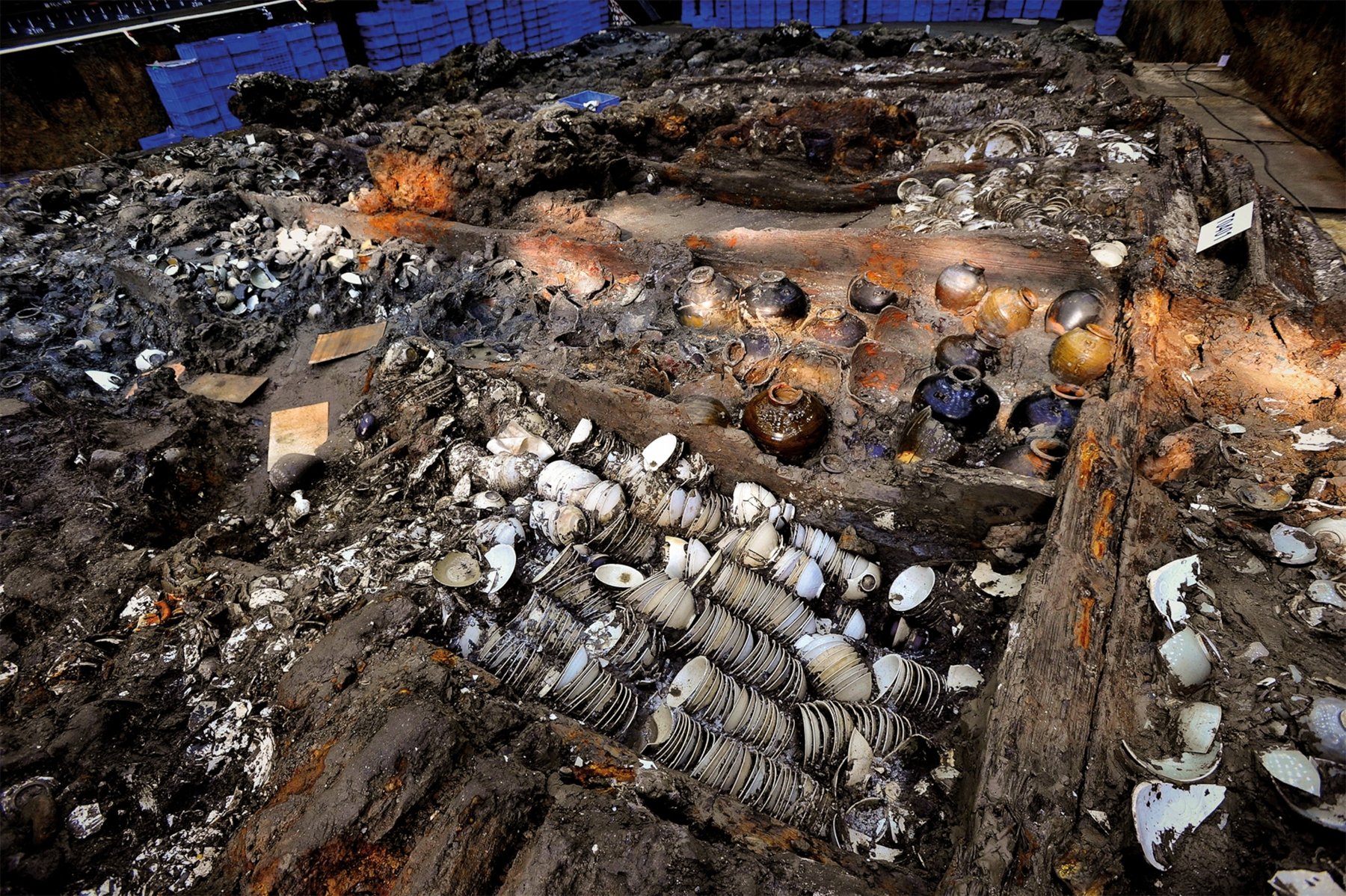
In 2015 and 2016, archaeologists investigated the Housi’ao kiln site in Zhejiang. According to the Palace Museum, the discoveries there helped identify a production center for mise porcelain and gave researchers new evidence about its materials and firing methods.
This was a different kind of discovery from the one beneath the pagoda. At Famen, an inventory and vessels had survived together in a sealed deposit. At Housi’ao, evidence came from a place of production. Considered together, the finds helped researchers connect an old courtly name with both surviving objects and the work of making them.
The Famen record remains especially valuable because it does not ask us to identify secret-color porcelain by beauty alone. A Tang list gave researchers a name and quantities to compare with the finds. More than a thousand years after the chamber was sealed, those practical details became the key to a much older mystery.
References
- Casa Ásia – Coleção Francisco Capelo. (2025, November 28). Yueyao bowl. https://casaasia-cfc.scml.pt/en/collection/china/yueyao-bowl/
- Guanfu Museum. (2022, February 27). 论低调炫技,只服秘色瓷 [The understated skill of secret-color porcelain]. The Paper. https://www.thepaper.cn/newsdetail_forward_16868468
- Guggenheim Museum. (n.d.). China: 5000 years: Tang ceramics. http://pastexhibitions.guggenheim.org/china/ceramics/tang.html
- Hu, Y., & Ma, Z. (2020, December 22). Porcelain power. China Daily. http://global.chinadaily.com.cn/a/202012/22/WS5fe13b13a31024ad0ba9d353.html
- National Museum of China. (n.d.). 秘色瓷碗 [Secret-color porcelain bowl]. https://www.chnmuseum.cn/zp/zpml/kgfjp/202203/t20220315_254325.shtml
- The Palace Museum. (2017). Mise porcelain: Impressive discovery and mysterious tribute. https://intl.dpm.org.cn/exhibition/details/63313.html
- Wang, S. (2026, February 7). 再论法门寺地宫出土金银平脱秘色瓷碗 [Reconsidering the gold-and-silver-decorated secret-color bowls excavated from the Famen Temple crypt]. China Cultural Relics News. http://www.zhongguowenwubao.com/portal/DigitPager/paperDetail/publishdate/2026-02-07/paperId/22291/id/110833